A 10 kV drop-out fuse is simple equipment, but selecting and installing it correctly is what keeps an overhead distributor reliable. This guide covers the selection parameters, the arithmetic behind them, and the installation checks that prevent contact heating and premature failure. Where a Drop-Out Fuse Is Used The 10 […]
Continue readingWhat are the defects in the quality of the drop out fuse?
Drop-out fuses are the most common protective device on 10 kV distribution branch lines and distribution transformers. Understanding how they work helps buyers spot the quality defects that lead to overheating, failed drops, and burned or exploded tubes. This guide covers the mechanism, the defects that trace back to manufacturing, […]
Continue reading
What advantages and cost comparison in Synthetic composite pipe vs. Vulcanized fiber epoxy filament wound tube ?
When a fuse housing must interrupt an arc, designers choose between three material families: a synthetic arc-quenching composite liner, vulcanized fiber composite tube, and epoxy filament-wound tube. Each has a different balance of performance and cost. This article compares them on the metrics that decide total cost, not just the […]
Continue reading
which tools of melamine tube sizes on stock now?
We hold melamine tube ID tooling in stock so you can move from drawing to finished part quickly, without the lead time and cost of new tooling. This page lists the stock inner diameters, explains how to read a melamine tube drawing, and shows how custom tooling works when your […]
Continue reading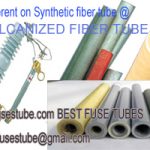
tubo portafusible,tubos fusibles,tubo combinado em fibra vulcanizada
The vulcanized fiber and fiberglass composite tube, called tubo portafusible or tubo combinado en fibra vulcanizada in Spanish and tubo porta-fusível in Portuguese, is the arc-quenching liner used in expulsion fuse tubes that interrupt high-voltage AC circuits during faults. Buyers across Latin America and Brazil search for it under these […]
Continue reading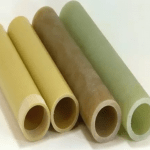
What difference of G10 FR4 Filament winding glass tubing and epoxy fiberglass roll cloth tubes?
G10 and FR4 filament-wound glass tubing and epoxy glass roll-cloth tubes are both composite insulators, but the manufacturing method changes how they perform. This article compares the two, clears up the most common confusion about what G10 and FR4 actually mean, and gives you a selection path you can defend […]
Continue reading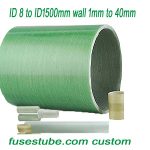
G10 filament wound fiberglass tubes
G10 filament-wound fiberglass tubes are a step up from generic G10 rolled tubing. Where a generic tube is wound from layers of woven cloth with generic fiber placement, a filament-wound tube uses roving reinforcements in a specialized epoxy matrix designed for the application. This article explains the difference, the dimensions […]
Continue reading
Fiber Tubing, Grey, Red, Black, White ,Vulcanized Fiber Tubes, Vulcanised Fibre Tubes, Fuse Tubes,
Vulcanized fiber tubing, also spelled vulcanised fibre tubing, is a dense, rigid insulating material with good physical and mechanical properties, dielectric strength, arc resistance, and arc-quenching behavior. It has been a standard choice for fuse tubes and high-voltage cutout liners for decades, and it is still the reference material that […]
Continue reading
How sure to if need to replace an bone fiber liner epoxy fiberglass fuse tube ?
How sure to if need to replace an bone fiber liner epoxy fiberglass fuse tube ? The outer surface of the epoxy FRP fuse tube.
It should be checked for excessive weathering. If the gray
polyurethane paint has completely faded, so the underlying polyurethane paint has completely faded.

How different Insulating Kraft Paper Sleeves -a spiral or convolute winding paper tube and vulcanized fiber tube?
Two insulating tubes are often compared for motor and transformer service: the spiral or convolute wound kraft paper tube and the vulcanized fiber (hardened fiber) tube. They look similar in a catalog but are made very differently, and that difference decides where each one belongs. How Each Tube Is Made […]
Continue reading