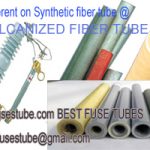
A fuse holder in a drop-out fuse cutout does more than carry the fuse link. Its design determines whether the cutout interrupts a high-intensity fault cleanly and drops the tube to isolate the line. For distribution utilities, that difference shows up as either a clean isolation or a damaged cutout […]
Continue readingGuide to Use Vulcanized Fiber Tubes Composite fiberglass for Power Protection
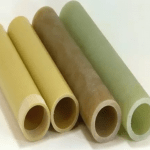
Vulcanized fiber tubes, often combined with epoxy fiberglass, are a workhorse of power protection. They insulate, quench arcs, and survive the mechanical shock of fault interruption in high-voltage current limiters, drop fuses, and fuse cutouts. This guide explains what they are, why engineers specify them, and how to use them. […]
Continue readingEV PV fuse market demand and melamine tube selection
Electric-vehicle, photovoltaic, wind, and energy-storage systems all rely on fuses for circuit protection, and each application drives a different type and volume of fuse. For fuse-tube and insulating-component buyers, understanding where the demand comes from helps you specify the right materials and avoid costly redesigns. This guide breaks down typical […]
Continue readingUL standard solar photovoltaic fuse & melamine tubing
Solar photovoltaic systems concentrate high DC voltages and currents in places that are hard to service: rooftops, tracker arrays, and combiner boxes exposed to the weather for decades. That combination is exactly why PV fuses are specified under their own standards rather than borrowed from industrial AC practice. This article […]
Continue readingHow to choose 10KV drop out fuse and installation?
A 10 kV drop-out fuse is simple equipment, but selecting and installing it correctly is what keeps an overhead distributor reliable. This guide covers the selection parameters, the arithmetic behind them, and the installation checks that prevent contact heating and premature failure. Where a Drop-Out Fuse Is Used The 10 […]
Continue readingWhat advantages and cost comparison in Synthetic composite pipe vs. Vulcanized fiber epoxy filament wound tube ?
When a fuse housing must interrupt an arc, designers choose between three material families: a synthetic arc-quenching composite liner, vulcanized fiber composite tube, and epoxy filament-wound tube. Each has a different balance of performance and cost. This article compares them on the metrics that decide total cost, not just the […]
Continue readingwhich tools of melamine tube sizes on stock now?
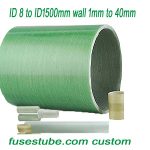
We hold melamine tube ID tooling in stock so you can move from drawing to finished part quickly, without the lead time and cost of new tooling. This page lists the stock inner diameters, explains how to read a melamine tube drawing, and shows how custom tooling works when your […]
Continue readingtubo portafusible,tubos fusibles,tubo combinado em fibra vulcanizada
The vulcanized fiber and fiberglass composite tube, called tubo portafusible or tubo combinado en fibra vulcanizada in Spanish and tubo porta-fusível in Portuguese, is the arc-quenching liner used in expulsion fuse tubes that interrupt high-voltage AC circuits during faults. Buyers across Latin America and Brazil search for it under these […]
Continue readingWhat difference of G10 FR4 Filament winding glass tubing and epoxy fiberglass roll cloth tubes?
G10 and FR4 filament-wound glass tubing and epoxy glass roll-cloth tubes are both composite insulators, but the manufacturing method changes how they perform. This article compares the two, clears up the most common confusion about what G10 and FR4 actually mean, and gives you a selection path you can defend […]
Continue readingG10 filament wound fiberglass tubes
G10 filament-wound fiberglass tubes are a step up from generic G10 rolled tubing. Where a generic tube is wound from layers of woven cloth with generic fiber placement, a filament-wound tube uses roving reinforcements in a specialized epoxy matrix designed for the application. This article explains the difference, the dimensions […]
Continue reading