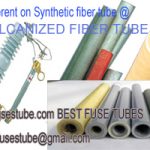
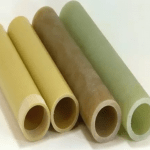
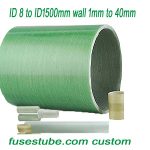
G10 filament wound fiberglass tubes

G10 filament-wound fiberglass tubes are a step up from generic G10 rolled tubing. Where a generic tube is wound from layers of woven cloth with generic fiber placement, a filament-wound tube uses roving reinforcements in a specialized epoxy matrix designed for the application. This article explains the difference, the dimensions […]

Continue reading→
Vulcanized Fiber Tube

Fiber Tubing, Grey, Red, Black, White ,Vulcanized Fiber Tubes, Vulcanised Fibre Tubes, Fuse Tubes,

Vulcanized fiber tubing, also spelled vulcanised fibre tubing, is a dense, rigid insulating material with good physical and mechanical properties, dielectric strength, arc resistance, and arc-quenching behavior. It has been a standard choice for fuse tubes and high-voltage cutout liners for decades, and it is still the reference material that […]

Continue reading→
Moisture-proof fuse tube or a horn fiber fuse tube

Moisture-proof fuse tube or horn fiber fuse tubes

For cutout fuse construction, two tube designs are common: the moisture-proof fuse tube and the horn fiber fuse tube. Each suits a different current class and environment, and choosing the right one reduces liner expansion that can cause interruption problems. Two Tube Types, Two Duties Moisture-proof fuse tube: standard on […]

Continue reading→
G5/g9 Melamine tube Line

G5/g9 Melamine tube Line

G5 and G9 melamine tubes are produced by lamination molding and tube rolling. Understanding the process explains why melamine tube behaves the way it does, why inner diameter affects the maximum producible length, and which of the two methods suits your part. This page covers both production routes and the […]

Continue reading→