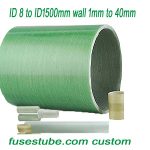
G10 filament-wound fiberglass tubes are a step up from generic G10 rolled tubing. Where a generic tube is wound from layers of woven cloth with generic fiber placement, a filament-wound tube uses roving reinforcements in a specialized epoxy matrix designed for the application. This article explains the difference, the dimensions […]
Continue readingFiber Tubing, Grey, Red, Black, White ,Vulcanized Fiber Tubes, Vulcanised Fibre Tubes, Fuse Tubes,
Vulcanized fiber tubing, also spelled vulcanised fibre tubing, is a dense, rigid insulating material with good physical and mechanical properties, dielectric strength, arc resistance, and arc-quenching behavior. It has been a standard choice for fuse tubes and high-voltage cutout liners for decades, and it is still the reference material that […]
Continue readingHow different Insulating Kraft Paper Sleeves -a spiral or convolute winding paper tube and vulcanized fiber tube?
Two insulating tubes are often compared for motor and transformer service: the spiral or convolute wound kraft paper tube and the vulcanized fiber (hardened fiber) tube. They look similar in a catalog but are made very differently, and that difference decides where each one belongs. How Each Tube Is Made […]
Continue readingWhat is a Fusible Link? how applied fuse links?
A fusible link is a short piece of insulated low-voltage cable within an automotive wiring harness, designed to protect the harness where a conventional fuse is unsuitable. This article explains what a fusible link is, how it is applied, and how it is sized and coordinated with the other overcurrent […]
Continue readingHow to Configure Your fuse-links tube
Configuring a fuse link tube means matching the fuse to the protection duty, then coordinating it with the other devices in the distribution system. Get this right and the fuse isolates only the faulted section; get it wrong and you get nuisance trips or an uncleared fault. This guide sets […]
Continue reading